Skip to content

Latest news

Initiative’s 2025 teaching and curriculum awardees report final project outcomes

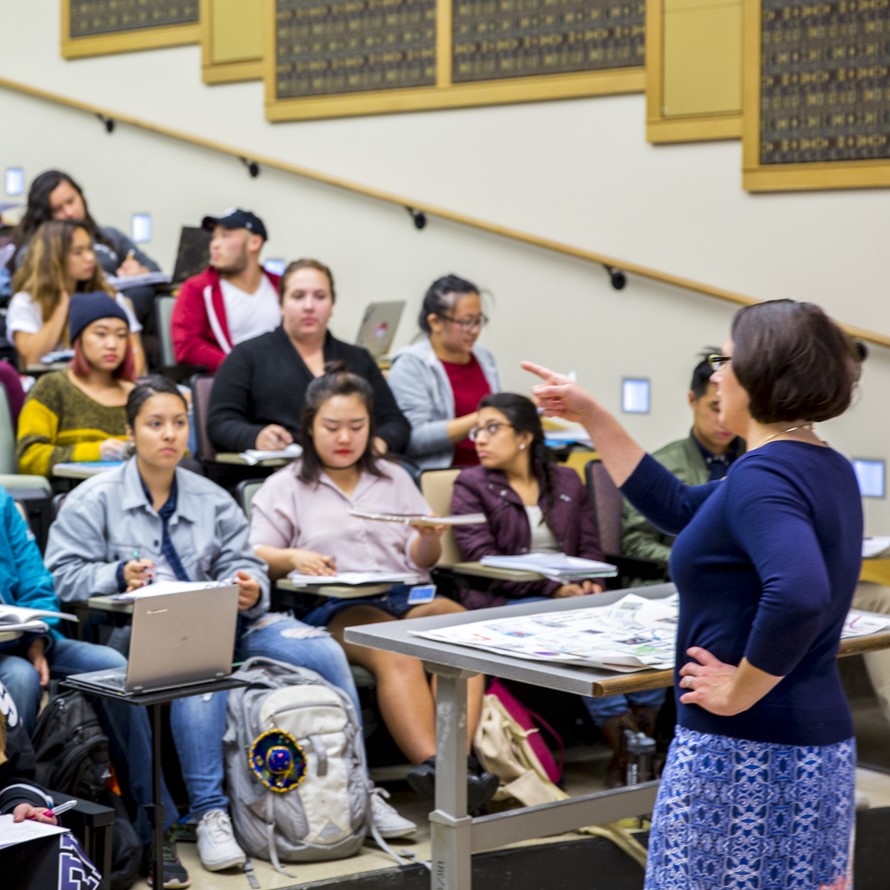
An instructor engages with students in a classroom settingDuring the 2025-26 academic year, four faculty-led projects supported by the University of Washington Civic Health Initiative explored innovative approaches to civic learning, democratic participation and community engagement.

Spanning topics from local government and elections to environmental stewardship, public policy and artificial intelligence, the projects combined classroom learning with real-world experiences, community partnerships and engagement with practitioners. Across all four efforts, students strengthened their civic knowledge, developed practical skills and gained a deeper understanding of how they can contribute to their communities and the public good.

Descriptions of the four funded projects and their outcomes are provided in the following tabs:

Project team
Jennifer Otten, Professor and Undergraduate Program Director, School of Public Health
Jillian Youngblood, Executive Director, Civic Genius

Project outcomes
With this award, I designed “The Politics of What We Eat: Building Better Food Policy Through Deliberation and Democracy,” a new three-credit undergraduate course teaching deliberative democracy methods (e.g., citizens’ assembly) on a current food policy debate (e.g., ultra-processed food or UPF policy). I developed the course with the help of three key resources:

  1. I attended an MIT workshop on polarization and trust in Dec 2025.
  2. I joined the Civic Health Pedagogies working group through the UW Center for Teaching & Learning, helping build a shared taxonomy for civic-health-oriented teaching tools across the UW.
  3. And, with community partner Jillian Youngblood (Civic Genius), including via design conversations, curated readings and my attendance, at her invitation, at a live weekend citizens’ assembly on AI policy in Snohomish, WA, to observe professional facilitation firsthand.

To pilot the SwayBeta.ai tool proposed in the original application, I ran four SwayBeta conversations across undergraduate and graduate food courses (a pre/post in a food security seminar, one on UPFs in a food policy course, and one in a graduate food-and-society seminar), generating individual and aggregate student data on cross-perspective dialogue.

Finally, I shared this work publicly: (a) at the Agriculture, Food, and Human Values Society (AFHVS) conference, I gave my presidential address on new national survey findings alongside classroom results from my SwayBeta conversations and other tools and (2) I presented this work as part of two conference panels on polarization and civic health pedagogies in food systems.

Project team
Jason Frederick Lambacher, Lecturer, University of Washington Bothell

Project outcomes
This project expanded students’ understanding of local government, elections and civic engagement through new curricular activities, community partnerships and guest speakers integrated across multiple UW Bothell courses. The work focused on municipal, county and state government, local elections and pathways for civic participation.

Students participated in hands-on activities such as researching elected representatives, analyzing local election ballots and exploring legislative issues and government functions. They also interacted directly with practitioners from government, advocacy organizations and political campaigns, including representatives from King County Elections, local governments, elected officials’ offices and civic engagement nonprofits. These experiences provided practical insight into public institutions and introduced students to potential careers in public service, advocacy and policy.

The project increased students’ knowledge of local government and helped reduce the sense of distance many young people feel from politics and public institutions. Students developed a greater appreciation for local elections, community advocacy and grassroots engagement while gaining a clearer understanding of how they can contribute to civic life. Student feedback reflected strong interest in local issues, public affairs careers and opportunities to engage in civil society, suggesting the project successfully strengthened civic awareness and participation.

Project team
Veronica Cassone McGowan, Director and Senior Research Scientist, University of Washington Bothell

Project outcomes
COSEE Community-Partnered Ecosystem Monitoring and Outreach used Civic Health Initiative seed funding to connect undergraduate learning, ecological research, community-based restoration and public participation in environmental stewardship. The project was implemented through the University of Washington Bothell Collaborative for Socio-Ecological Engagement (CoSEE) and was grounded in the premise that ecological stewardship and civic participation are deeply connected. Communities are better positioned to care for shared socio-ecological systems when residents have opportunities to participate in producing knowledge about those systems, understand how individual and collective actions shape ecological health and see themselves as contributors to restoration and monitoring efforts.

A major outcome of the project was the ability to leverage these seed funds within Yard by Yard, a community-led restoration effort focused on increasing native plant habitat and ecological connectivity across private lands. Through this partnership, CoSEE added an ecosystem-monitoring layer to residential restoration work. This allowed private yards to function not only as restoration sites, but also as places where ecological change could be observed, documented, and connected to broader questions of habitat quality and landscape connectivity.

This monitoring component helped make visible the role that private lands can play in larger ecological networks. By pairing restoration with monitoring, the project supported public learning about how individual property-level actions can contribute to connected habitat, wildlife movement, and neighborhood-scale ecological resilience. The work also strengthened community awareness of the importance of long-term observation after restoration, rather than treating planting as a one-time intervention.

Project team
Clara Berridge, Associate Professor, School of Social Work

Project outcomes
With the support of this funding, I developed and piloted a permanent course, SOC WF 440: Social Welfare and AI: Power, Ethics, and Social Impacts, which critically engages with AI as a site where questions about well-being, equality, visibility and representation are being negotiated.

The course focuses on ethical and policy questions and the social impacts of a diverse range of AI applications (e.g., mental health, child welfare, elder care, public benefits). It has a strong emphasis on learning about these issues from diverse fields and engages guest lecturers from the iSchool, Political Science, Human Centered Design & Engineering and Social Work.

The course foregrounds the pivotal role context plays in shaping the impacts of AI as sociotechnical systems on individuals, communities and societies. Students learn about civic engagement pathways through a newly developed assignment on civil society organizations’ efforts to shape AI practices and policy and protect against harms.

For this assignment, students present on their chosen civil society group working on issues of AI, enabling everyone to learn about the focal areas, strategies and impacts of many organizations. It prompted numerous reflective comments about the value of understanding the role and work of civil society in democratic governance. Students reported that these presentations made them feel hopeful and connected.

More information about the Civic Health Initiative Teaching and Curriculum Awards program can be found by visiting its program page.
Hands-on learning across Washington drives impact for students and communities

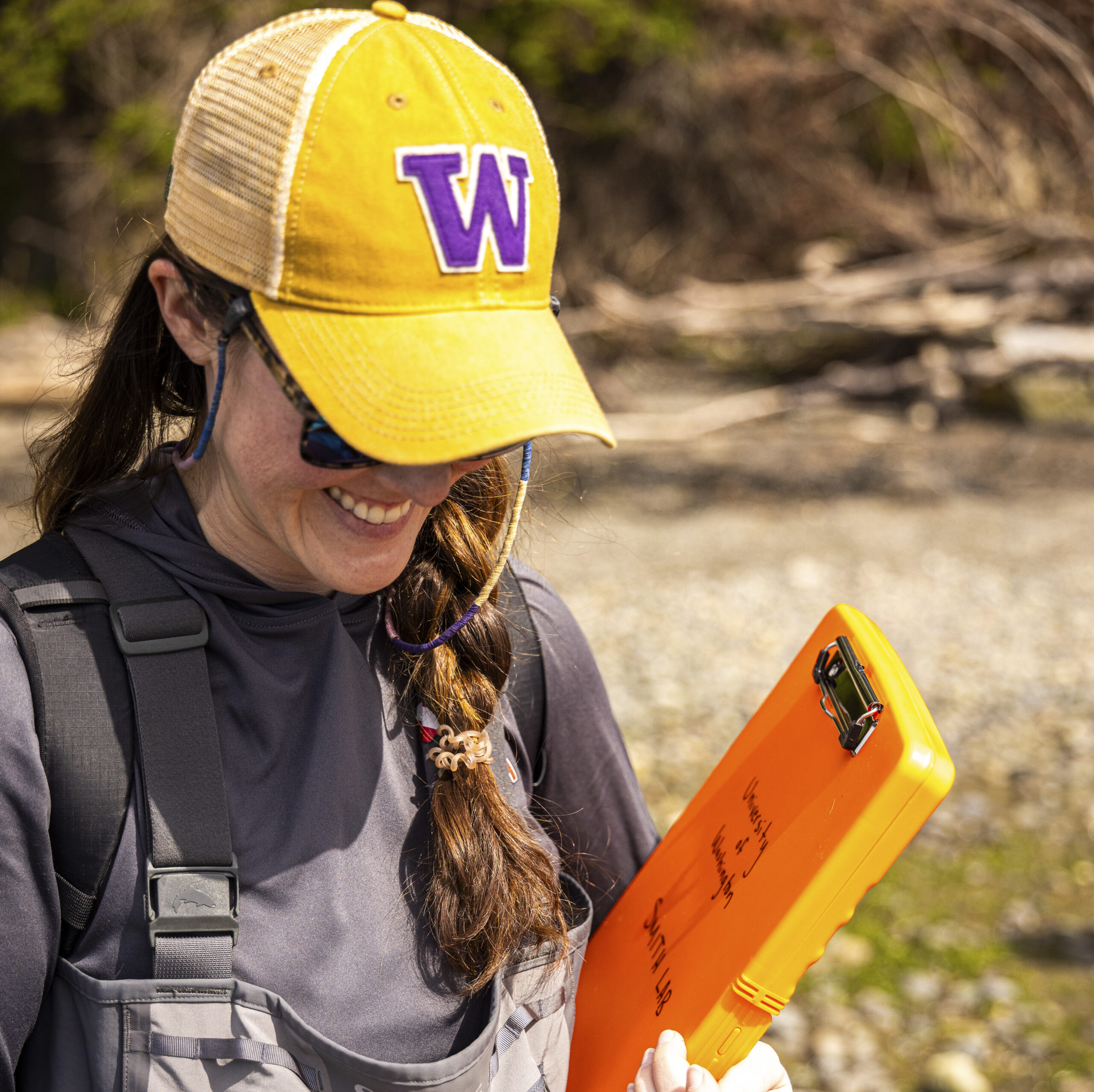
A student wearing a gold University of Washington hat holds an orange clipboard while surveying a tide flatThe University of Washington’s commitment to community-engaged learning has earned all three campuses the Carnegie Foundation’s Community Engagement Classification, recognizing the institution’s deep and sustained partnerships with communities across the state. Through collaborations with more than 700 organizations, UW students apply classroom knowledge to real-world challenges, gaining hands-on experience while contributing to solutions in areas such as environmental stewardship, public health and education.

Students like aquatic and fishery sciences senior Callie Murakami and public health senior Natalia Lizarraga exemplify the impact of this approach. Murakami conducts field research in coastal ecosystems that supports environmental restoration efforts, while Lizarraga’s work with immigrant communities has strengthened her understanding of public health and inspired her to continue serving those communities professionally.

University leaders say these partnerships create meaningful learning opportunities that deepen students’ understanding of complex issues while delivering tangible benefits to local organizations and residents. Across its Seattle, Bothell and Tacoma campuses, the UW continues to expand community-based learning initiatives that connect education with service, preparing students to make lasting contributions to the communities and environments they serve.

Read the Original Article >

UW researchers develop AI-powered tool to search millions of government documents

A man reviews files on a computer screenA University of Washington-led research team has developed GovScape, a new AI-powered search platform that helps users quickly find information within millions of government documents preserved in the End of Term Web Archive.
The tool supports keyword, semantic and visual searches, allowing users to locate documents by specific terms, topics or features such as redactions, charts and photographs. Currently indexing approximately 10 million federal government PDFs, GovScape is designed to make vast digital archives more accessible to researchers, journalists and the public.

The combining of text and image analysis with highly efficient AI models allows the platform can process and search large collections of complex documents at a fraction of the cost of traditional approaches. Researchers plan to expand GovScape to cover the archive’s full collection of 70 million documents, further improving public access to government information and historical records.

Read the Original Article >

UW Faculty Field Tour showcases Washington communities and industries

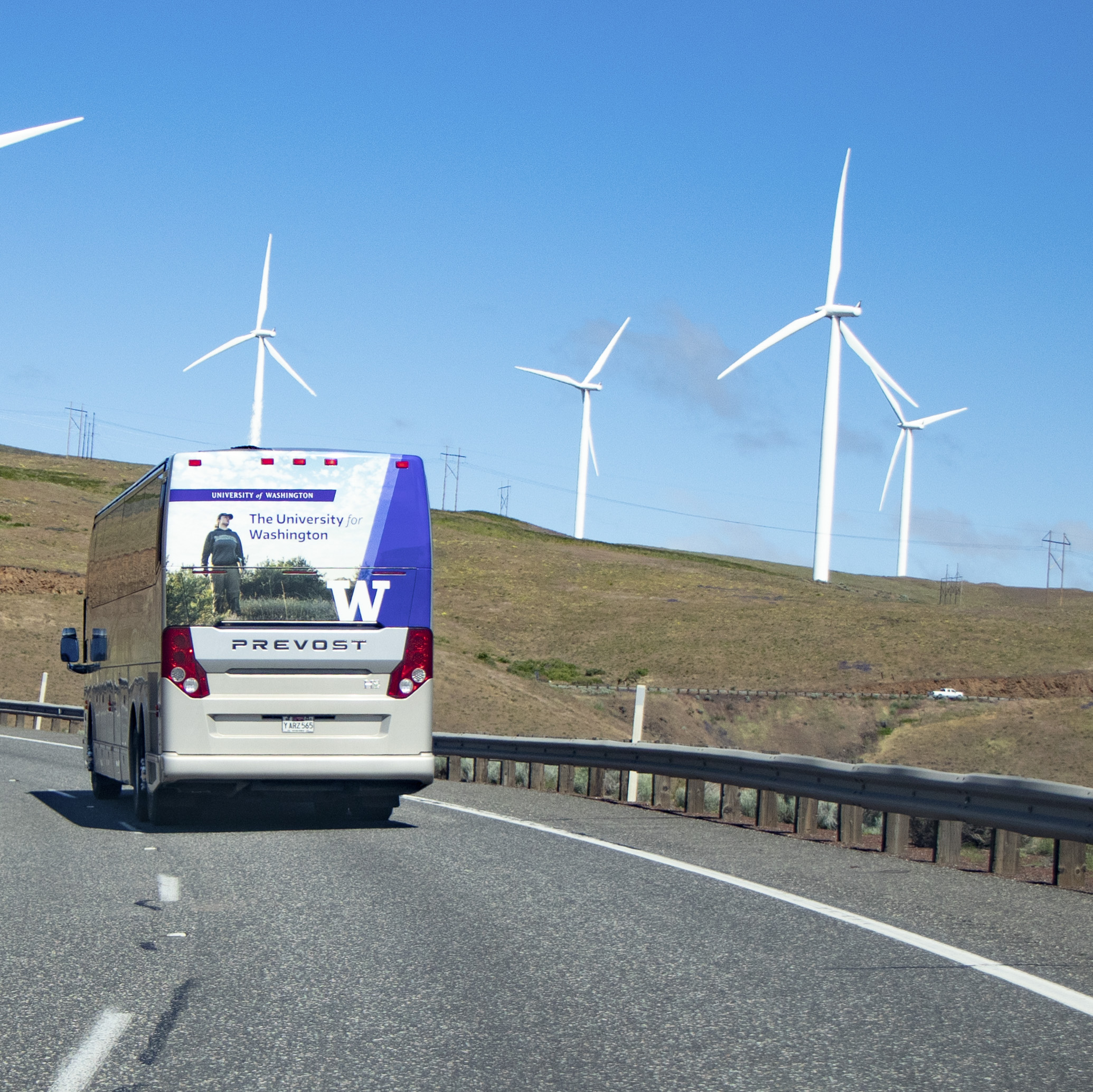
A University of Washington-branded bus travels on a highway in Eastern WashingtonMore than two dozen new University of Washington faculty members traveled across Washington this June as part of the annual Faculty Field Tour, a program designed to connect participants with the communities, industries and landscapes that shape the experiences of students across the state.

During the five-day tour, faculty visited historic sites, the state capitol, health clinics, farms, vineyards and communities on both sides of the Cascade Mountains, gaining firsthand insight into Washington’s diverse economy, geography and regional priorities.

Now in its fourth decade, the Faculty Field Tour helps new faculty better understand the people and places the UW serves while building connections among colleagues from the university’s three campuses. University leaders, including President Robert J. Jones and Provost Tricia Serio, joined portions of this year’s tour, underscoring the UW’s commitment to serving communities throughout Washington.

Read the Original Article >

Study shows feed reordering can lower partisan hostility without removing posts

Image of social media icons with a cell phone in the backgroundResearchers from the University of Washington, Stanford and Northeastern developed a web-based tool that can reduce partisan hostility on X without removing posts or requiring platform cooperation.
The tool uses AI to downrank posts showing antidemocratic attitudes or extreme partisan animosity, such as advocating violence or rejecting bipartisan cooperation. In a 10-day experiment with 1,200 participants during the 2024 election, those exposed to less of this content reported warmer feelings toward the opposing party, with effects seen across political affiliations. The approach builds on sociology research and leverages AI for nuanced feed reordering.

The team published findings in Science and released the tool’s code for others to explore interventions aimed at reducing polarization and improving outcomes like mental health and civic engagement.

Read the Original Article >

Carnegie Foundation reaffirms the UW’s leadership in community‑engaged scholarship

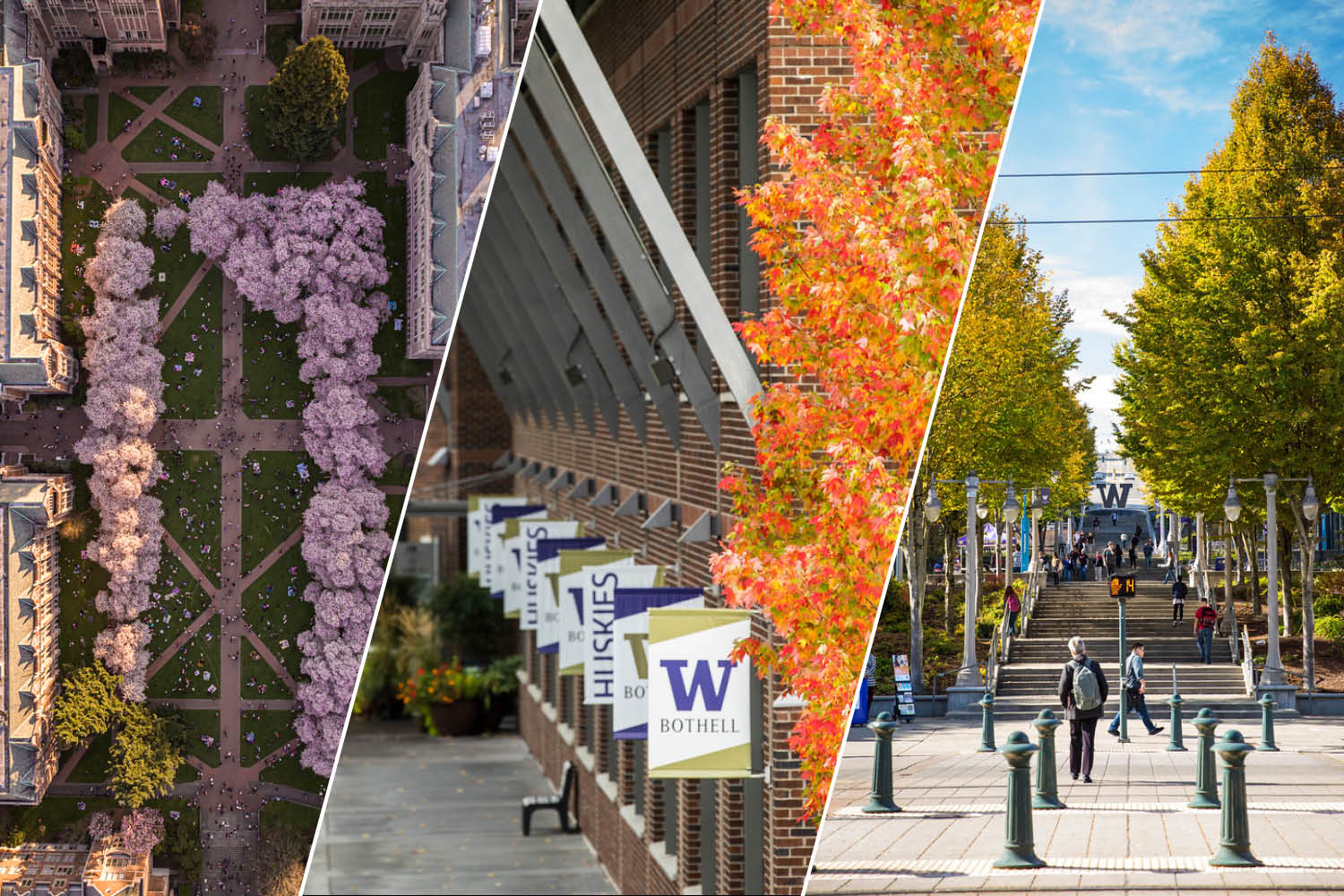
Image of the three UW campusesThe University of Washington has been reclassified across all three campuses with the Carnegie Foundation Community Engagement designation, recognizing the depth and impact of its partnerships with local, regional, and global communities. This distinction places UW among 277 institutions nationwide noted for centering community assets and addressing societal challenges through sustained collaboration.
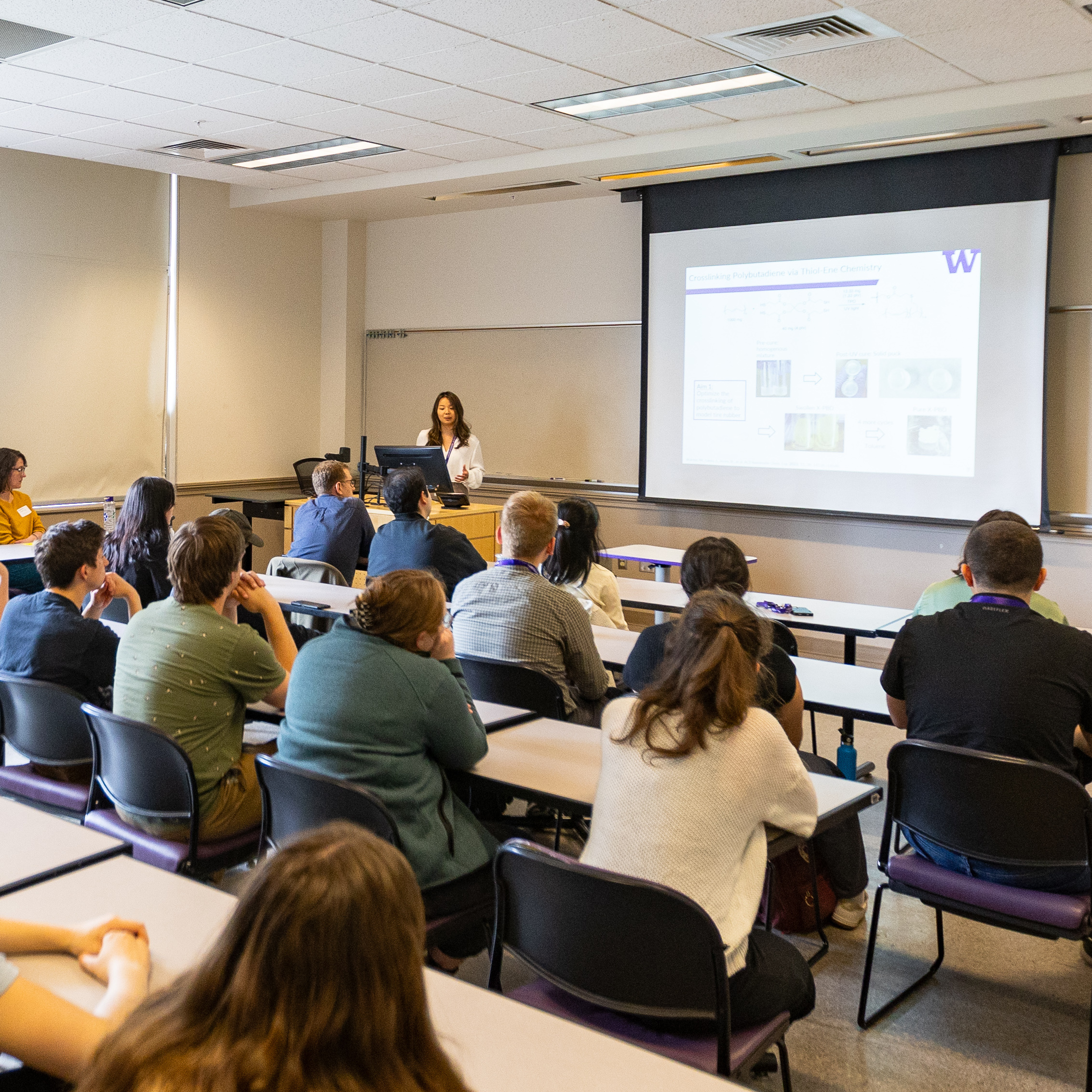
The reclassification builds on the UW’s initial 2020 designation and reflects expanded infrastructure, coordinated tri‑campus efforts and partnerships with more than 700 community organizations. University leaders emphasized that community engagement is central to UW’s public mission, advancing student learning, equitable outcomes and meaningful community‑driven change across Washington state and beyond.

Read the Original Article >

UW leadership program seeks to empower the region’s future leaders

An instructor speaks to a classroom audienceThe University of Washington’s Puget Sound Institute, in partnership with the Evans School of Public Policy & Governance and UW Tacoma’s Milgard School of Business, has launched a new initiative to train the next generation of Puget Sound leaders. This program will equip participants with the necessary skills for navigating complex environmental and public policy challenges that the Puget Sound region faces.
Spanning many sectors, with support from both the Washington Department of Fish & Wildlife and the Department of Natural Resources, the program recognizes how interdisciplinary collaboration is often the catalyst for producing meaningful change. Participants will learn about leadership skills such as emotional intelligence, conflict resolution and negotiation, through lessons of past local successes. With this, the project leaders aim to foster intergenerational knowledge exchange.

The Collaborative Leadership Program is set to launch in 2026, with opportunities for community engagement and support.

Learn More >

Applications open for Evidence-Based Teaching fellowship focused on civic health

Image of a forested landscape with the Teaching@UW logo imposed over the skylineAs part of the University of Washington’s ongoing efforts to advance civic health, we are pleased to share an opportunity for faculty to participate in the 2026–2028 Evidence-Based Teaching Fellowship.
Fellows will explore research-backed teaching strategies and design assignments that help students across disciplines (e.g., STEM, humanities, social sciences, fine arts) develop the skills needed for meaningful participation in civic life. These skills prepare students to apply their disciplinary expertise to civic processes that support communities in addressing complex challenges. Participants will receive a $2,000 stipend upon successful completion of the two-year program.

Applications are open until April 9, 2026. Learn more and apply by visiting the Teaching@UW website.

Initiative grants small research awards to four UW graduate students

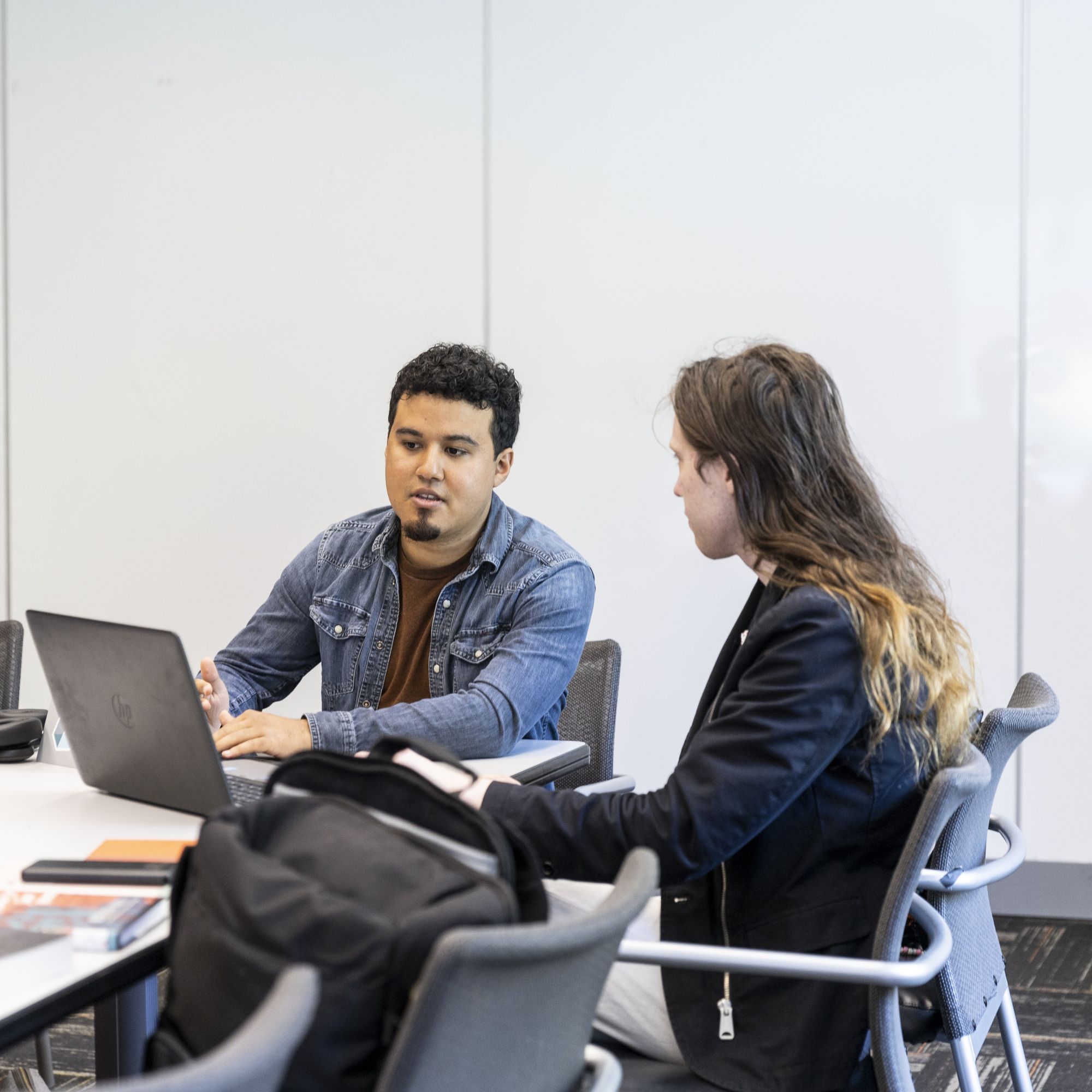
Two students work collaboratively on a project while seated at a tableThe Civic Health Initiative has awarded four grants of $2,000 each to University of Washington graduate and postdoctoral researchers working to generate new knowledge that strengthens civic health, democracy and the structures that support it.
These awards are intended to help cover research expenses associated with dissertations, thesis fieldwork or independent projects conducted under the supervision of a faculty advisor, mentor or principal investigator. The period of performance for these projects is one year.

The four awardees and their projects are:

  • Ryan DeCarsky of the College of Arts & Sciences for a project investigating how queer communities and clinicians in the San Francisco Bay Area collaboratively reshape sexual health care in the era of PrEP, DoxyPEP and U=U, demonstrating how queer practical knowledge can inform more equitable, responsive and democratically engaged health systems.
  • Mark Nepf of the Evans School of Public Policy & Governance for a project examining how environmental justice can be advanced through collaborative environmental management by analyzing how organizational differences among the 28 National Estuary Programs shape equitable community engagement in watershed governance.
  • Julia Simoes of the College of Arts & Sciences for a project examining how dialogic pedagogy can strengthen collaborative practice and civic health in diverse Colorado communities by developing, implementing and evaluating a dialogic capacity‑building series for community mobilizers engaged in upstream violence‑prevention and systems‑change work.
  • Arielle Weaver of the Evans School of Public Policy & Governance for a project investigating how the racial identity of Black probation officers shapes their discretionary decision‑making within a highly racialized criminal legal system, illuminating how community supervision influences democratic inclusion, public trust and the civic health of marginalized communities.

More information about the Civic Health Initiative’s graduate student and postdoctoral scholar small research awards program can be found by visiting its program page.

Initiative awards four research grants to teams of UW faculty members

Audience engages with a speaker in an outdoor settingThe Civic Health Initiative announced the award of four grants worth $25,000 each to teams of University of Washington faculty members, plus community partners, from the Bothell, Seattle and Tacoma campuses.

“The breadth and depth of the project ideas that we received in response to this funding call was inspiring,” shared Ed Taylor, the UW’s vice provost and dean of Undergraduate Academic Affairs, and co-lead for the Civic Health Initiative. “We are pleased to support these teams as they develop new research innovations in areas such as youth civic education and leadership, strengthening local civic engagement and guiding decision making about environmental stewardship.”

These research awards help faculty members and PI-eligible research staff to generate preliminary data or proof-of-concept to pursue follow-on funding or further develop their ideas.

“We were particularly pleased by the range of academic fields that applied,” added Jodi Sandfort, dean of the UW’s Evans School of Public Policy & Governance and the other co-lead for the Initiative. “Interest from all three of our campuses underscores the role each of us can play in revitalizing civic health and bolstering democratic institutions across the country.”

Descriptions of each of the four funded projects are included in the following sections.

Project team
Veronica Cassone McGowan, Director of the Collaborative for Socio-Ecological Engagement, UW Bothell
David Stokes, Emeritus Professor, School of Interdisciplinary Arts & Sciences, UW Bothell
Scott Morrison, Finn Hill Neighborhood Alliance

Project summary
Communities in the Kenmore and Kirkland areas of Washington State are experiencing rapid urban development alongside grassroots, community-led restoration efforts. These changes directly affect ecological systems, access to nature, and community well-being, yet residents and local organizations often lack accessible tools to understand and respond to these impacts.

This project will create a community-engaged, AI-assisted wildlife monitoring program that connects civic health, environmental stewardship and undergraduate education at UW Bothell. Undergraduate students will be trained to deploy wildlife cameras, manage large image datasets and use artificial intelligence tools to analyze wildlife presence and habitat use across sites experiencing development and restoration, and will crosscheck and train AI tools for ethical and accurate use as data.

Students will work in partnership with local organizations to interpret results and communicate findings in accessible formats for community use to guide decision-making around land conservation, restoration and policies regarding trail development and use. By integrating AI, community partnerships and place-based learning, the project strengthens civic health by increasing community access to environmental data, supporting evidence-based restoration and building shared knowledge about local ecosystems. At the same time, it broadens students’ understanding of civic and environmental careers, demonstrating how technology, data and community engagement can work together to address local challenges. The project will generate both practical monitoring tools and a replicable model for community-centered, technology-enabled environmental action.

Project team
Nic Weber, Associate Professor, Information School

Project summary
Local governments across the United States invite public comment as a core mechanism of democratic input. Yet research consistently shows that the people who show up to speak are unrepresentative of broader community opinion. The result is a distorted public record – residents who follow local affairs encounter a narrow, often polarized slice of their neighbors’ views and mistake it for the whole. This kind of misperception, known as pluralistic ignorance, has measurable consequences.

When people believe their opinions are marginal, they lose confidence that participation can influence government action, and they disengage. Recent experiments demonstrate that correcting analogous misperceptions in partisan contexts can meaningfully shift attitudes and behavior, yet no work has tested whether correcting community-level misperceptions can restore engagement in local civic life.

Our project addresses this gap. We have designed a survey experiment we call Civic Mirror, built around a predict-then-correct framework. For several local policy topics, participants (1) share their own view, (2) predict the distribution of opinions among their neighbors, and (3) see the actual distribution alongside their prediction. We will deploy Civic Mirror with approximately 500 participants across four cities in Washington and Michigan. We contribute a scalable experimental platform for testing whether correcting pluralistic ignorance at the local level can strengthen political efficacy and increase intentions to participate in local government.

Project team
Huatong Sun, Professor of Culture, Arts, & Communication, UW Tacoma
Belinda Louie, Professor of Education, UW Tacoma

Project summary
There is an urgent need for effective scam-prevention resources for marginalized communities. Federal Trade Commission reports older adults in the U.S. lost $2.4 billion to financial fraud in 2024. As scams increasingly operate as a global enterprise enhanced by Generative AI, immigrant communities are targeted through scams delivered in their native languages.

This pilot project cultivates critical AI literacies among UWT undergraduate students and empowers them to become influential voices in a transdisciplinary ecosystem of AI for the public good. In partnership with the Chinese Community Center of Tacoma, we launched a community-engaged experiential learning program this quarter to create community resources for scam-prevention efforts, including social media campaigns and toolkits, community workshop materials and a project website. These design prototypes will be refined across multiple communication courses, with support from student workers. Community
workshops will be delivered in the summer, and the social media campaign and website will be launched in the fall, followed by evaluation.

Through fieldwork and a critical design process, students will gain essential AI literacies on scams and social media influencer skills, enabling them to become thought leaders who promote public understanding of AI and strengthen community resilience. We seek seed funding for pilot community-engaged activities. The project’s outcomes will inform future proposals to major funders (e.g., NSF, NEH) and help adapt the resulting scam-prevention resources to additional marginalized communities. Aligned with the initiative’s mission, this project will enhance the community’s civic health, foster future change-makers and clear the path to civic participation.

Project team
Christine Keating, Associate Professor of Gender, Women & Sexuality Studies

Project summary
This project partners with Escuela Popular Norteña to pilot a youth civic education and leadership initiative centered on Hispano youth in the Taos Valley region of northern New Mexico. Young people in the region face persistent structural barriers to civic participation shaped by economic inequality, cultural marginalization, community outmigration and limited local employment opportunities. At the same time, Hispano communities in the Taos Valley sustain longstanding traditions of cultural continuity, intergenerational knowledge sharing and community leadership that offer powerful foundations for youth civic engagement.

The project will establish youth civic learning labs where participants collectively examine the social, economic and environmental challenges shaping their lives while developing community-based civic and economic initiatives. Drawing on popular education traditions, the program centers collaborative learning, community dialogue and youth leadership development. Participatory arts practices will support reflection, relationship-building and civic learning.

The project will culminate in a public community education and dialogue event designed to foster intergenerational connection and strengthen young people’s civic participation and efficacy. Research activities will generate pilot data examining how culturally grounded popular education strengthens youth civic identity, leadership development, and community engagement, producing a curriculum, leadership toolkit, and evaluation framework to support future external funding and program expansion.

More information about the Civic Health Initiative Research Awards program can be found by visiting its program page.