Skip to content

Initiative grants small research awards to four UW graduate students

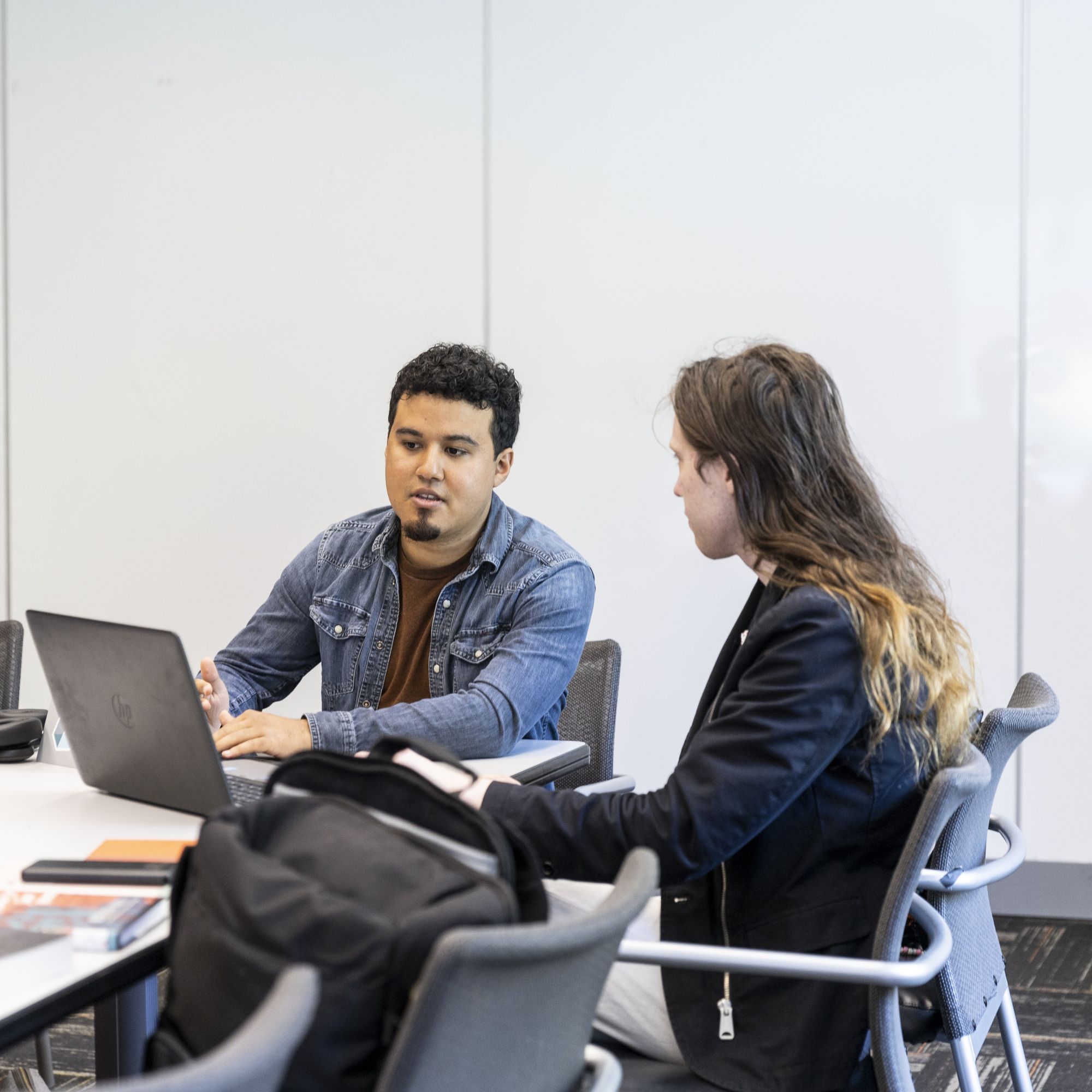
Two students work collaboratively on a project while seated at a tableThe Civic Health Initiative has awarded four grants of $2,000 each to University of Washington graduate and postdoctoral researchers working to generate new knowledge that strengthens civic health, democracy and the structures that support it.

These awards are intended to help cover research expenses associated with dissertations, thesis fieldwork or independent projects conducted under the supervision of a faculty advisor, mentor or principal investigator. The period of performance for these projects is one year.

The four awardees and their projects are:

  • Ryan DeCarsky of the College of Arts & Sciences for a project investigating how queer communities and clinicians in the San Francisco Bay Area collaboratively reshape sexual health care in the era of PrEP, DoxyPEP and U=U, demonstrating how queer practical knowledge can inform more equitable, responsive and democratically engaged health systems.
  • Mark Nepf of the Evans School of Public Policy & Governance for a project examining how environmental justice can be advanced through collaborative environmental management by analyzing how organizational differences among the 28 National Estuary Programs shape equitable community engagement in watershed governance.
  • Julia Simoes of the College of Arts & Sciences for a project examining how dialogic pedagogy can strengthen collaborative practice and civic health in diverse Colorado communities by developing, implementing and evaluating a dialogic capacity‑building series for community mobilizers engaged in upstream violence‑prevention and systems‑change work.
  • Arielle Weaver of the Evans School of Public Policy & Governance for a project investigating how the racial identity of Black probation officers shapes their discretionary decision‑making within a highly racialized criminal legal system, illuminating how community supervision influences democratic inclusion, public trust and the civic health of marginalized communities.

More information about the Civic Health Initiative’s graduate student and postdoctoral scholar small research awards program can be found by visiting its program page.
Initiative awards four research grants to teams of UW faculty members

Audience engages with a speaker in an outdoor settingThe Civic Health Initiative announced the award of four grants worth $25,000 each to teams of University of Washington faculty members, plus community partners, from the Bothell, Seattle and Tacoma campuses.

“The breadth and depth of the project ideas that we received in response to this funding call was inspiring,” shared Ed Taylor, the UW’s vice provost and dean of Undergraduate Academic Affairs, and co-lead for the Civic Health Initiative. “We are pleased to support these teams as they develop new research innovations in areas such as youth civic education and leadership, strengthening local civic engagement and guiding decision making about environmental stewardship.”

These research awards help faculty members and PI-eligible research staff to generate preliminary data or proof-of-concept to pursue follow-on funding or further develop their ideas.

“We were particularly pleased by the range of academic fields that applied,” added Jodi Sandfort, dean of the UW’s Evans School of Public Policy & Governance and the other co-lead for the Initiative. “Interest from all three of our campuses underscores the role each of us can play in revitalizing civic health and bolstering democratic institutions across the country.”

Descriptions of each of the four funded projects are included in the following sections.

Project team
Veronica Cassone McGowan, Director of the Collaborative for Socio-Ecological Engagement, UW Bothell
David Stokes, Emeritus Professor, School of Interdisciplinary Arts & Sciences, UW Bothell
Scott Morrison, Finn Hill Neighborhood Alliance

Project summary
Communities in the Kenmore and Kirkland areas of Washington State are experiencing rapid urban development alongside grassroots, community-led restoration efforts. These changes directly affect ecological systems, access to nature, and community well-being, yet residents and local organizations often lack accessible tools to understand and respond to these impacts.

This project will create a community-engaged, AI-assisted wildlife monitoring program that connects civic health, environmental stewardship and undergraduate education at UW Bothell. Undergraduate students will be trained to deploy wildlife cameras, manage large image datasets and use artificial intelligence tools to analyze wildlife presence and habitat use across sites experiencing development and restoration, and will crosscheck and train AI tools for ethical and accurate use as data.

Students will work in partnership with local organizations to interpret results and communicate findings in accessible formats for community use to guide decision-making around land conservation, restoration and policies regarding trail development and use. By integrating AI, community partnerships and place-based learning, the project strengthens civic health by increasing community access to environmental data, supporting evidence-based restoration and building shared knowledge about local ecosystems. At the same time, it broadens students’ understanding of civic and environmental careers, demonstrating how technology, data and community engagement can work together to address local challenges. The project will generate both practical monitoring tools and a replicable model for community-centered, technology-enabled environmental action.

Project team
Nic Weber, Associate Professor, Information School

Project summary
Local governments across the United States invite public comment as a core mechanism of democratic input. Yet research consistently shows that the people who show up to speak are unrepresentative of broader community opinion. The result is a distorted public record – residents who follow local affairs encounter a narrow, often polarized slice of their neighbors’ views and mistake it for the whole. This kind of misperception, known as pluralistic ignorance, has measurable consequences.

When people believe their opinions are marginal, they lose confidence that participation can influence government action, and they disengage. Recent experiments demonstrate that correcting analogous misperceptions in partisan contexts can meaningfully shift attitudes and behavior, yet no work has tested whether correcting community-level misperceptions can restore engagement in local civic life.

Our project addresses this gap. We have designed a survey experiment we call Civic Mirror, built around a predict-then-correct framework. For several local policy topics, participants (1) share their own view, (2) predict the distribution of opinions among their neighbors, and (3) see the actual distribution alongside their prediction. We will deploy Civic Mirror with approximately 500 participants across four cities in Washington and Michigan. We contribute a scalable experimental platform for testing whether correcting pluralistic ignorance at the local level can strengthen political efficacy and increase intentions to participate in local government.

Project team
Huatong Sun, Professor of Culture, Arts, & Communication, UW Tacoma
Belinda Louie, Professor of Education, UW Tacoma

Project summary
There is an urgent need for effective scam-prevention resources for marginalized communities. Federal Trade Commission reports older adults in the U.S. lost $2.4 billion to financial fraud in 2024. As scams increasingly operate as a global enterprise enhanced by Generative AI, immigrant communities are targeted through scams delivered in their native languages.

This pilot project cultivates critical AI literacies among UWT undergraduate students and empowers them to become influential voices in a transdisciplinary ecosystem of AI for the public good. In partnership with the Chinese Community Center of Tacoma, we launched a community-engaged experiential learning program this quarter to create community resources for scam-prevention efforts, including social media campaigns and toolkits, community workshop materials and a project website. These design prototypes will be refined across multiple communication courses, with support from student workers. Community
workshops will be delivered in the summer, and the social media campaign and website will be launched in the fall, followed by evaluation.

Through fieldwork and a critical design process, students will gain essential AI literacies on scams and social media influencer skills, enabling them to become thought leaders who promote public understanding of AI and strengthen community resilience. We seek seed funding for pilot community-engaged activities. The project’s outcomes will inform future proposals to major funders (e.g., NSF, NEH) and help adapt the resulting scam-prevention resources to additional marginalized communities. Aligned with the initiative’s mission, this project will enhance the community’s civic health, foster future change-makers and clear the path to civic participation.

Project team
Christine Keating, Associate Professor of Gender, Women & Sexuality Studies

Project summary
This project partners with Escuela Popular Norteña to pilot a youth civic education and leadership initiative centered on Hispano youth in the Taos Valley region of northern New Mexico. Young people in the region face persistent structural barriers to civic participation shaped by economic inequality, cultural marginalization, community outmigration and limited local employment opportunities. At the same time, Hispano communities in the Taos Valley sustain longstanding traditions of cultural continuity, intergenerational knowledge sharing and community leadership that offer powerful foundations for youth civic engagement.

The project will establish youth civic learning labs where participants collectively examine the social, economic and environmental challenges shaping their lives while developing community-based civic and economic initiatives. Drawing on popular education traditions, the program centers collaborative learning, community dialogue and youth leadership development. Participatory arts practices will support reflection, relationship-building and civic learning.

The project will culminate in a public community education and dialogue event designed to foster intergenerational connection and strengthen young people’s civic participation and efficacy. Research activities will generate pilot data examining how culturally grounded popular education strengthens youth civic identity, leadership development, and community engagement, producing a curriculum, leadership toolkit, and evaluation framework to support future external funding and program expansion.

More information about the Civic Health Initiative Research Awards program can be found by visiting its program page.

Initiative awards three teaching and curriculum grants to UW instructors

The Civic Health Initiative announced the award of three small grants worth $2,000 each to University of Washington instructors from the Bothell, Seattle and Tacoma campuses.

The purpose of these teaching and curriculum awards is to support UW instructors who have innovative proposals that approach civic health, civic engagement and democracy through new curricular perspectives, methods and activities. The funded curricular topics ranged in focus from creating paths to civic participation, juvenile justice and climate education.

The three projects that were funded during this cycle are described in the following tabs.

Project team
Anne Taufen, Professor, School of Urban Studies, UW Tacoma

Project summary
This project is scoping for a UW study-abroad course with Ecuador partner (USFQ), focused on sustainable development, global environmental change, and community health. UWT in Galapagos: Global Flows, Local Impacts is community-engaged, interdisciplinary, and aligned with multiple degree pathways. It will offer a three-week immersion in Ecuador (Quito and San Cristobal, Galapagos) followed by one week of intensive integration and synthesis UW Tacoma.

The course will foster future change makers in creating paths to civic participation, with a community engaged learning component in Galapagos and the opportunity to work directly with neighborhood groups, public agencies, and NGOs. After orientation in Quito, we will fly to San Cristobal in the Galapagos Islands, the very heart of the history of modern biological observation and systems-based understanding of scientific evolution.

Staying in USFQ faculty housing in San Cristobal, environmental conditions and community health resources will be evaluated for inclusion in the course – with attention to impacts of rapid mainland urbanization, intense tourism, strong military presence, and significant resource disparities among island inhabitants and cosmopolitan visitors (Ecuadoran and international). Potential excursions will be assessed for Summer 2027 UWT program, considering safety, feasibility, cost and alignment with learning outcomes.

Project team
Ann Frost, Associate Teaching Professor, College of Arts & Sciences

Project summary
The Youth Empowerment Program will engage Law, Societies, and Justice students in the work of learning about the rights of juveniles in Washington State, training in educating juveniles about their rights and running workshops to inform and educate juveniles and school administrators.

Washington State is unique in that the state legislature has passed laws (i.e., Youth Access to Counsel (YAC)) that specifically seek to protect juveniles during inherently coercive interactions with law enforcement. There is no mechanism designed to inform students, or administrators at their schools, about this legislation or the rights afforded to children in this state.

As part of the Youth Empowerment Project, LSJ students will first learn about juvenile justice, the rights afforded to juveniles in Washington State, and the circumstances that the law seeks to protect them from, including coercive interrogations, false confessions and wrongful criminal charges.

Lawyers from the state Office of Public Defense who administer the YAC law will train the LSJ students in running workshops to educate and inform juveniles and school administrators about these rights. The LSJ students will then visit local middle and high schools to run educational workshops, likely as part of state-required civics days.

Project team
Veronica Cassone McGowan, Director, Collaborative for Socio-Ecological Engagement, UW Bothell
Maddie Iem, Program Manager, Collaborative for Socio-Ecological Engagement, UW Bothell

Project summary
Through this project, we will adapt 4–6 climate-centered children’s books into accessible learning tools that include communication boards, interactive elements, and embedded discussion prompts. Preservice education interns will co-design these materials as part of their coursework and supervised professional learning experiences.

We will assemble backpack learning kits that pair adapted books with simple place-based climate engagement activities focused on carbon, energy use and community observation. Materials will be piloted through professional learning workshops and integrated into UW Bothell science methods courses. Feedback from families, educators and interns will inform iterative refinement of the materials.

More information about the Civic Health Initiative Teaching and Curriculum Awards program can be found by visiting its program page.

UW researchers explore the how and why behind the spread of false election rumors

A folded newspaper sits on a tableMisinformation does not just relate to bad facts – it is how people construe information through their various social and political lenses. Researchers at the University of Washington’s Center for an Informed Public are exploring how false election rumors emerge not from outright deception, but from how individuals comprehend ambiguous events.
The study reveals how political narratives, online influencers and collective sensemaking psychology shape misinformation. The authors warn of the growing online ecosystem that is specifically designed to amplify election-related misinformation, which may fuel real-world consequences, noting that misinformation goes far beyond fact-checking and requires a recognition of how perceptions can be distorted.

Learn More >

UW study reveals deep strain in Washington Legislature after 2025 session

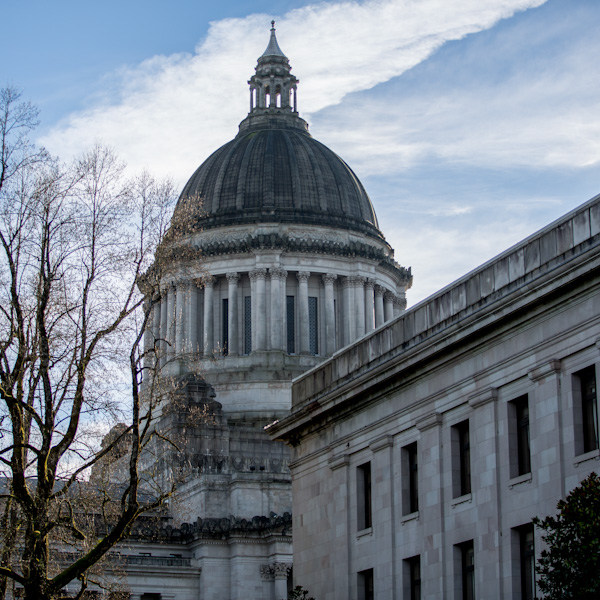
Image of Washington state capitolA new effort to strengthen collaboration and civility in Olympia is underway after a University of Washington report found that many lawmakers viewed the 2025 legislative session as one of the most difficult in recent memory. The study, commissioned by the bipartisan Joint Select Committee on Civic Health, asked state senators and representatives to reflect on the past session and offer ideas for improving the culture of the Washington State Legislature.

The committee is focused on reducing polarization and encouraging more respectful engagement in public life. Interviews conducted by the University of Washington’s Evans School of Public Policy & Governance revealed deep frustration among lawmakers, who cited strained interpersonal relationships, outdated institutional structures and procedural barriers that hindered effective participation.

Despite the challenges, researchers say the shared sense of difficulty presents an opportunity. By identifying common problems across party lines, the committee hopes to support legislators in rebuilding trust, improving communication and strengthening civic health within the institution ahead of future sessions.

Access the Full Report >

Exploring how innovation inequality helps to shape American politics

Image of the Seattle skyline looking towards the Space NeedleWith America’s political polarization constantly in focus, pundits and politicians have long debated its root causes. Many have argued that social and cultural differences are to blame, but a new book, U.S. Innovation Inequality and Trumpism: The Political Economy of Technology Deserts in a Knowledge Economy, by a University of Washington researcher argues that the true division correlates to economic and technological disparities.
In the book, UW professor Victor Menaldo teamed with recent UW doctoral graduate Nicolas Wittstock to explore how America’s divides between its high-tech hubs, such as Silicon Valley, and less innovative regions, may have led to the rightwing populist movement. The authors propose that “innovation inequality” was crucial towards Donald Trump’s rhetoric in 2016, as voters in regions that felt left behind by the modern knowledge economy gravitated towards Trump.

The authors then look at the 2020 election, which saw a shifting political landscape, with big tech taking footholds in traditionally blue-collar areas in states such as Georgia and Arizona, which flipped to Joe Biden. This shift reinforces the notion that “innovation inequality” plays a crucial role in shaping American politics.

Learn More >

Initiative releases funding call for its small grants program

Teachers meet in a classroomThe University of Washington Civic Health Initiative has released a funding call for three different categories of small grants. These grant programs are designed to foster new collaborations and innovations that strengthen civic health and democratic institutions nationwide.
Innovations proposed for funding to these grant programs must align with one or more of the areas of focus for the Initiative’s work. Applications for all three programs are due on Friday, February 6, 2026.

Teaching and curriculum awards

The purpose of this funding mechanism is to support UW faculty members who have innovative proposals that approach civic health, civic engagement and democracy through new curricular perspectives, methods and activities. The Initiative’s interests are broad in scope, so applications can propose projects with a range of foci. These foci include, but are not limited to, revising a course, creating an interactive learning activity, designing a student experience and so forth. Awards of up to $2,000 each are available.

Research awards

The purpose of this grant is to support faculty members and PI-eligible research staff to develop preliminary data or proof-of-concept needed to pursue follow-on funding or additional concept development to scale one’s efforts. Research projects should seek to catalyze new lines of inquiry and may include, but not be limited to, qualitative or qualitative empirical work, data analysis, evidence synthesis, comparative study, and so forth. Awards of up to $25,000 each are available.

Graduate student and postdoctoral scholar research awards

The purpose of this category of funding is to support UW graduate and postdoctoral researchers who are seeking to generate new knowledge that strengthens civic health, democracy and the structures that support it. The grants can fund research for dissertations, thesis field work or the student’s own topic of research completed under the supervision of a faculty advisor, mentor or principal investigator. Awards of up to $2,000 each are available.

Learn more

Please visit the Initiative’s funding page to learn more about these programs.

New UW research utilizes social networks to track homelessness, inform policy decisions

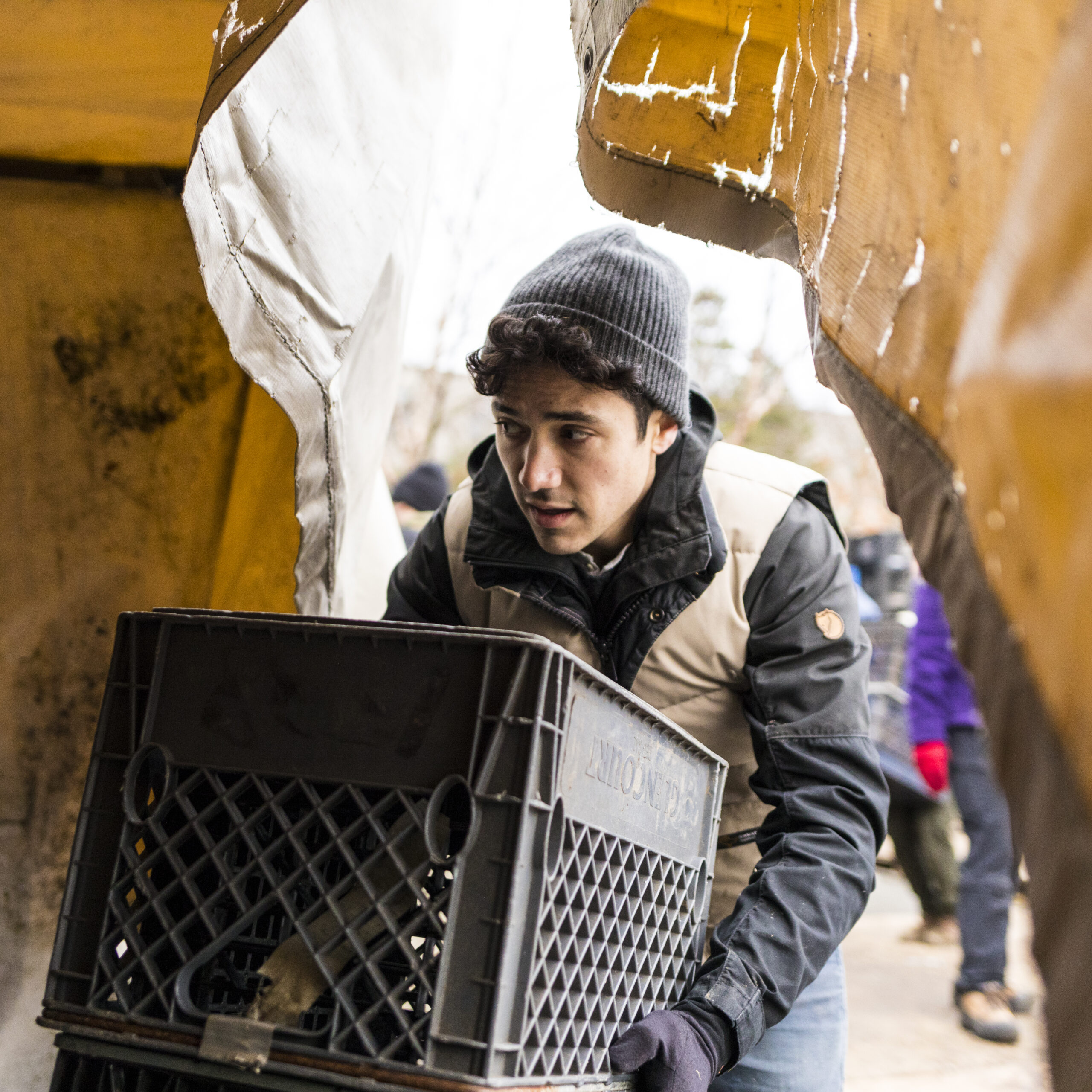
A Tent City resident carries personal belongingsData drives policy, and flawed data may drive flawed policy. Current methods of tracking homelessness often vastly underestimate the number of unhoused individuals, which can have great ramifications on funding and policy decisions. A University of Washington research team has developed a more accurate method for tracking homelessness in King County, helping to address this crucial gap.
Led by professors Zack Almquist and Amy Hagopian, the team ditched the widely-used Point-in-Time (PIT) tracking method – a single-night census – with social network-based sampling. This new method does not rely on volunteer counting people seen outside, instead incorporating shelter rosters and peer referral to estimate the total population. This method of leveraging people’s social networks produces a much more accurate count, helping to reflect the true reality of homelessness in Seattle.

King County has used this method since 2022, and it has garnered insights about the demographics and structural causes of homelessness. King County has now focused on quarterly homelessness counts, hoping that this approach will provide valuable longitudinal data. This method could also be applied to other populations that are difficult to measure, such as undocumented migrants.

Learn More >

Tri-City Herald publishes op-ed proposing to overcome polarization by rebuilding civic trust

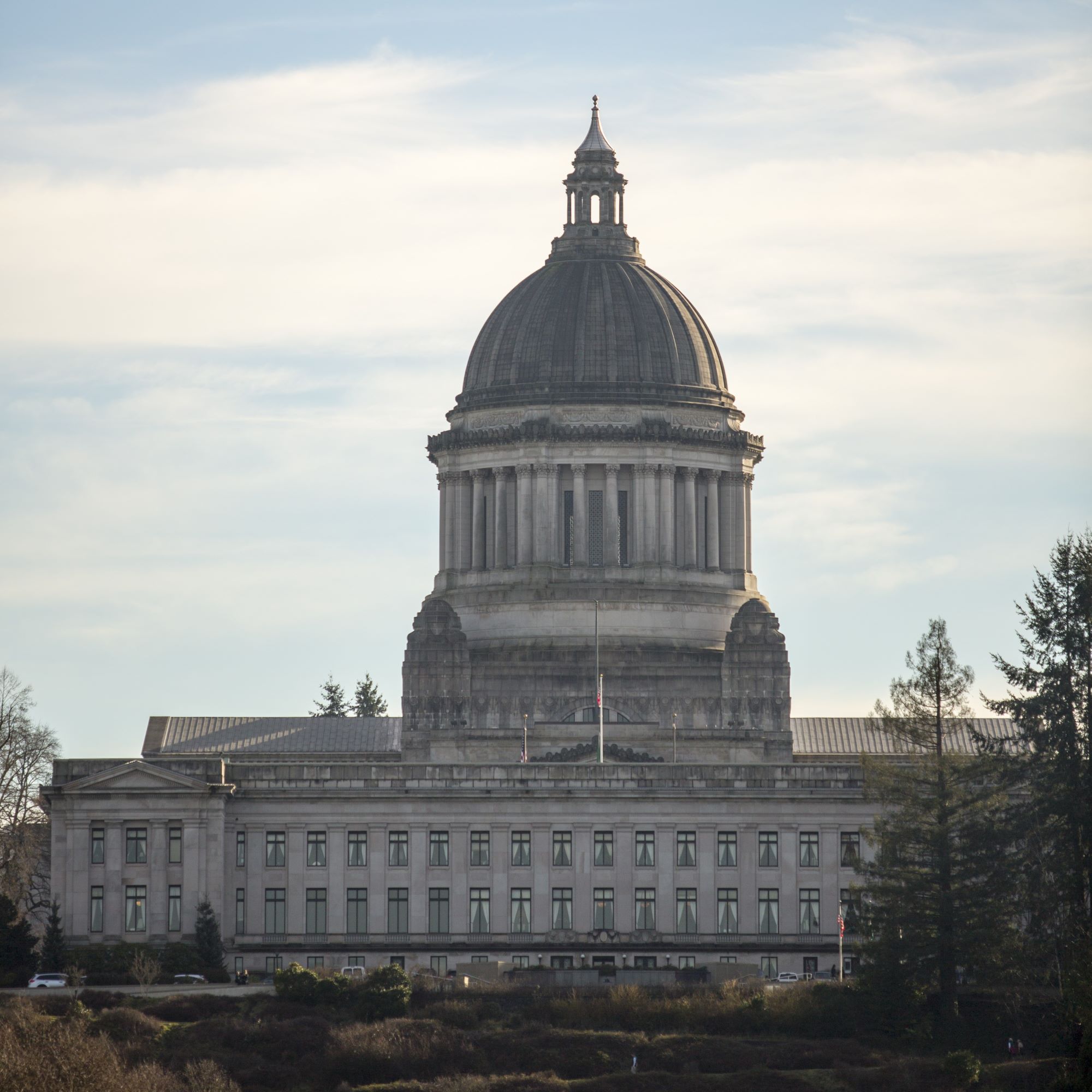
Image of the Washington state capitol buildingThe Tri-City Herald recently published an opinion piece by Jodi Sandfort, one of the leaders of the University of Washington Civic Health Initiative, in which she shares how the rebuilding of civic trust can help overcome partisan polarization.
To illustrate a path forward, she highlighted the success of the Washington Collaborative Elected Leaders Institute (WA-CELI), which is a program designed to rebuild civic trust and reduce partisan polarization among elected officials in Washington State. Developed by the UW Evans School of Public Policy & Governance and The William D. Ruckelshaus Center, WA-CELI fosters collaboration by helping leaders reconnect with their shared identity as public servants. Through training in conflict resolution, integrity-based leadership and community-focused service, the program demonstrates that bipartisan cooperation is possible when trust and mutual respect are prioritized.

Sandfort also emphasized that rebuilding civic trust is not just the responsibility of elected officials, but rather a collective effort. She introduced the Project for Civic Health, a statewide initiative promoting respectful engagement, constructive disagreement and the pursuit of common ground. By encouraging individuals and organizations to commit to these principles, the project aims to cultivate a culture of civic health across Washington.

Read the Full Op-Ed >

Elected leaders institute seeks a more collaborative political culture

Image of the dome of the Washington state capitol buildingWith government trust low and political division high, there is great opportunity to plant the seeds for civic health. Recognizing this issue, leaders from the University of Washington and Washington State University sought a solution. Inspired in part by Lt. Governor Denny Heck’s Project for Civic Health, which called for improved political collaboration, they launched a new initiative to foster bipartisan leadership in Washington.

The Washington Collaborative Elected Leaders Institute (WA-CELI) is not just another leadership program. Developed by the UW’s Evans School of Public Policy & Governance, WSU’s William D. Ruckelshaus Center and the Association of Washington Cities, WA-CELI is a hands-on, iterative experience that is designed to equip public leaders with key collaboration skills.

Last summer, the first in-person WA-CELI session was held at the UW’s Spokane Center, followed by a September session at WSU Everett and an October session at WSU Tri-Cities. A post-session capstone will be presented in Kennewick this June. Graduates of this program will join a network of public leaders committed to collaboration and affecting positive change in Washington.

Read the Full Story >